Connect with us

NBA

Projecting Cap Space Under Potential Labor Deal

Salary cap guru Eric Pincus breaks down and projects teams’ cap space under potential CBA.

Eric Pincus

Published

on

The NBA and NBA Players Union are nearing labor peace, working towards an extension of the Collective Bargaining Agreement (CBA) by December 15. The goal for both the owners and players is to reach a new, long-term deal early, avoiding a lockout next summer.

Exact details of an agreement that has yet to be reached are obviously unavailable, but some of the working concepts have leaked. The basic split of basketball related income (BRI) is expected to remain unchanged from the 49-51 percent band in the current deal.

The sooner a new CBA can be hashed out, the better for teams who need to make decisions based on salary-cap projections for the offseason and the summers to come. Leading up to previous lockout years, teams were essentially working in the dark, hoping future rule changes wouldn’t blow up their plans.

With a new deal arriving, likely well before the February 23 trade deadline, teams should have the necessary information to plan ahead.

Already, the NBA raised its cap projection for the 2017-18 season to $103 million, with a $123 million luxury-tax threshold. The league had originally predicted a $107 million cap, but rolled it back to $102 million when teams began to spend at such a high level in July.

That extra million in cap may not be enough to offset some of the prospective rule changes that could additionally limit spending power.

The working assumption is that minimum salaries, exceptions and rookie-scale contracts for first-round picks will jump by roughly 50 percent.

When calculating cap space, teams are charged a rookie-minimum salary for every open roster spot through 12 players. The current CBA dictates next season’s minimum to be $562,493, but it could scale up by 50 percent to $843,740.

A team with eight players would have $1.1 million total in four roster charges based on the current rules. That would jump to $2.2 million with a higher minimum salary—offsetting a $1 million bump in the NBA’s salary cap.

Similarly, the top overall pick in the 2017 NBA Draft has a rookie-scale salary of $5.1 million for next season. If the new CBA raises that by 50 percent as well, the player would take up $7.6 million unsigned. Teams currently have the latitude to pay up to 120 percent of that scale amount, which is why some franchises delay signing their first-rounders until after they’ve used every-last bit of salary cap space.

Exceptions also count against the cap. Teams that might have had $7.8 million in cap this past summer would technically be over by virtue of the Mid-Level Exception ($5.6 million) and Bi-Annual Exception ($2.2 million). In that situation, the exceptions could have been renounced to allow the team to sign a player at $7.8 million. Otherwise the team could stay over and use the exceptions to sign two or more players at a combined $7.8 million.

Factoring in a 50 percent bump, the Mid-Level would climb to $8.7 million and the Bi-Annual to $3.4 million. Together, teams over the cap would have $12.1 million in spending power to spend, with $8.7 million being the most they could give in starting salary to a single player.

A team that might be $12.1 million under the cap would have the choice of staying over with their exceptions.

Maximum salaries may stay flat, given how much they’ve jumped with the NBA’s current $94.1 million salary cap, but the criteria may change. Currently, players with up to six years of experience project to max at $24.2 million, those with seven to nine top out at $29 million and 10 or more would start at about $33.9 million.

Another key factor in determining space is the various formulae to determine a free agent’s cap hold. When a player’s contract expires, they still take up salary cap space on a team’s books until they’re re-signed, renounced or ink with another franchise.

The new CBA is expected to raise the cap hold for players at the end of rookie-scale contracts. Instead of giving Kawhi Leonard an extension, which would have limited the San Antonio Spurs’ spending power in 2015, the team let him become a restricted free agent with a $7.2 million cap hold. After using their space to bring in LaMarcus Aldridge, the Spurs gave Leonard a deal starting at $16.4 million. That $7.2 million would jump to $8.7 million (300 percent of his previous salary instead of 250 percent).

Victor Oladipo’s cap hold would have been $19.7 million next summer at 300 percent of his $6.6 million salary (up from $16.4 million). Instead, the Oklahoma City Thunder gave him an extension starting at $21.0 million.

As far as standard free agents not coming off rookie-scale deals, it’s unclear if the cap holds will climb, and if so by how much?

Finally, the new agreement is not likely to contain another amnesty clause, a mechanism in the current CBA to erase a single contract from a team’s cap (although the player still receives their salary).

The following is an estimate of the maximum cap space teams would have if they let all their free agents go. Rookie-scale contracts and empty roster charges are multiplied by a factor of 1.5. The working assumption is that teams will finish in the same draft order as last season. Obviously, that won’t be the case, but it’s just a bit too early in the year to take the standings seriously.

Team Maximum
(in millions)
Potential Free Agents
Golden State Warriors $58.6 Stephen Curry, Kevin Durant, Andre Iguodala, Shaun Livingston, Zaza Pachulia, David West, Ian Clark, James McAdoo, Anderson Varejao, JaVale McGee
Sacramento Kings $54.7 Rudy Gay, Arron Afflalo, Anthony Tolliver, Matt Barnes, Darren Collison, Ben McLemore, Omri Casspi, Ty Lawson, Jordan Farmar
Chicago Bulls $53.9 Dwyane Wade, Rajon Rondo, Taj Gibson, Nikola Mirotic, Michael Carter-Williams, Isaiah Canaan, Cristiano Felicio, R.J. Hunter
Philadelphia 76ers $47.3 Nerlens Noel, Ersan Ilyasova, Sergio Rodriquez, Gerald Henderson, Richaun Holmes, Robert Covington, Hollis Thompson, T.J. McConnell
Brooklyn Nets $40.7 Bojan Bogdanovic, Luis Scola, Greivis Vasquez, Randy Foye, Anthony Bennett, Sean Kilpatrick, Joe Harris
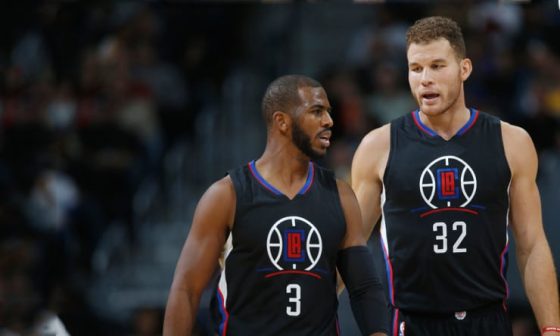
Los Angeles Clippers $39.3 Chris Paul, Blake Griffin, J.J. Redick, Luc Mbah a Moute, Marreese Speights, Brandon Bass, Raymond Felton, Alan Anderson, Paul Pierce (retiring)
Denver Nuggets $39.0 Danilo Gallinari, Mike Miller, Jarnell Stokes
Dallas Mavericks $37.0 Dirk Nowitzki, Andrew Bogut, Deron Williams, Devin Harris, Quincy Acy, Salah Mejri, Dorian Finney-Smith, Nicolas Brussino
Boston Celtics $32.2 Amir Johnson, Tyler Zeller, Jonas Jerebko, Kelly Olynyk, James Young, Demetrius Jackson, Jordan Mickey, Gerald Green
Utah Jazz $32.2 Gordon Hayward, George Hill, Boris Diaw, Shelvin Mack, Joe Ingles, Jeff Withey, Raul Neto, Joel Bolomboy
Los Angeles Lakers $31.9 Jose Calderon, Nick Young, Tarik Black, Marcelo Huertas, Metta World Peace, Thomas Robinson
Phoenix Suns $30.6 P.J. Tucker, Alex Len, Leandro Barbosa, John Jenkins, Alan Williams, Derrick Jones
Orlando Magic $29.7 Serge Ibaka, Jeff Green, Jodie Meeks, C.J. Watson, C.J. Wilcox, Damjan Rudez, Arinze Onuaku, Stephen Zimmerman
New Orleans Pelicans $28.3 Jrue Holiday, Tyreke Evans, Langston Galloway, Dante Cunningham, Terrence Jones, Lance Stephenson
San Antonio Spurs $25.7 Pau Gasol, Manu Ginobili, Patty Mills, Dewayne Dedmon, David Lee, Jonathon Simmons, Bryn Forbes, Nicolas Laprovittola
Indiana Pacers $25.4 Jeff Teague, Rodney Stuckey, C.J. Miles, Lavoy Allen, Aaron Brooks, Kevin Seraphin, Joseph Young, Rakeem Christmas, Glenn Robinson III, Georges Niang
Miami HEAT $21.4 Wayne Ellington, Josh McRoberts, Derrick Williams, Udonis Haslem, James Johnson, Dion Waiters, Luke Babbitt, Willie Reed, Josh Richardson, Rodney McGruder
New York Knicks $20.9 Derrick Rose, Brandon Jennings, Justin Holiday, Sasha Vujacic, Maurice N’dour, Marshall Plumlee, Ron Baker
Minnesota Timberwolves $18.9 Jordan Hill, Brandon Rush, Shabazz Muhammad, Adreian Payne, John Lucas III
Atlanta Hawks $16.0 Paul Millsap, Tiago Splitter, Kyle Korver, Kris Humphries, Thabo Sefolosha, Mike Scott, Tim Hardaway Jr., Mike Muscala, Ryan Kelly
Houston Rockets $12.0 K.J. McDaniels, Tyler Ennis, Nene, Bobby Brown, Kyle Wiltjer
Toronto Raptors $13.2 Kyle Lowry, Patrick Patterson, Jared Sullinger, Norman Powell, Fred VanVleet
Charlotte Hornets $0 Spencer Hawes, Ramon Sessions, Roy Hibbert, Brian Roberts, Christian Wood, Aaron Harrison, Treveon Graham
Cleveland Cavaliers $0 Mike Dunleavy, DeAndre Liggins, Jordan McRae, Kay Felder, Chris Andersen, James Jones
Detroit Pistons $0 Aron Baynes, Kentavious Caldwell-Pope, Reggie Bullock, Beno Udrih, Darrun Hilliard, Michael Gbinije
Memphis Grizzlies $0 Zach Randolph, Tony Allen, Vince Carter, JaMychal Green, Troy Williams
Milwaukee Bucks $0 Greg Monroe, Tony Snell, Michael Beasley, Jason Terry, Steve Novak
Oklahoma City Thunder $0 Andre Roberson, Nick Collison, Anthony Morrow, Joffrey Lauvergne, Jerami Grant, Semaj Christon
Portland Trail Blazers $0 Mason Plumlee, Festus Ezeli, Pat Connaughton, Tim Quarterman
Washington Wizards $0 Otto Porter, Trey Burke, Marcus Thornton, Daniel Ochefu, Danuel House, Sheldon McClellan

Teams can make trades or buy-out players to open up additional cap space. Several players have non-guaranteed salary, or team/player options. In most cases, to get to maximum cap room, the assumption is all players without 100 percent locked in salary are off the books.
Advertisement


Click to comment

Leave a Reply

Your email address will not be published. Required fields are marked *

NBA

NBA Daily: Boston’s Roster Finally Makes Sense

The Boston Celtics have underwhelmed more than any other teams this season. But a few recent in-house adjustments and moves at the trade deadline have so far yielded promising returns. Can they turn their season around?

Matt John

Published

on

When the trade deadline passed, there were two knee-jerk questions about the moves Boston made.

1. Just Evan Fournier?
2. You traded Daniel Theis to save a few bucks?

It is true that the Celtics let a rare opportunity slip through their fingers. Aaron Gordon and Nikola Vucevic were up for bidding and Boston came away with neither. They may come to regret that, but in the face of a season that started so promising only to develop into a cascade of inconsistency, frustration and what seems like a never-ending fight with COVID-19, Boston at least confronted their issues this time instead of hoping they’d work themselves out.

From a talent standpoint, Evan Fournier, Mo Wagner and Luke Kornet wouldn’t seem like a good enough haul for a team that’s trying to do a lot more than keep its head above water. Then again, talent wasn’t Boston’s issue. Health has certainly been among the most prevalent issues, as they’ve been snakebitten harder by the coronavirus than anyone this season.

Jayson Tatum’s play since contracting the virus hasn’t slowed him down entirely, but he’s struggled mightily on back-to-backs since recovering from it. That already adds to the inconvenience of Kemba not being able to play on back-to-backs with his ongoing knee issues. Those problems have definitely played a part in Boston’s struggles.

However, the Celtics’ most glaring concern before the trade deadline was that their roster just did not mesh on multiple levels. So, when they made the moves that they did, their intentions may not have been to get the best infusion of talent on the open market, but to fill its roster holes. What holes were filled? Let’s start with their higher-rep acquisition, Fournier.

Our own Dylan Thayer already did a great job filling everyone in on what kind of player Boston would be getting with the Frenchman. Instead of rehashing what’s already been said about Fournier’s game, emphasis needs to be made on why Boston was looking for someone like him.

The Celtics offense has technically been better this year – 114.0 offensive rating – than last – 113.3 – and yet they went from the league’s fourth-best offensive rating to the 12th according to Basketball-Reference. That’s more indicative of what this COVID-shortened season has done to defenses league-wide. However, in Boston’s case, their scoring burden has been placed more on the starters than ever before.

Boston’s bench scoring as of April 3rd has the 26th lowest point average at 31.8 points a game. Last year, they were actually tied for last in that department, but they could live with it because the scoring prowess between Tatum, Kemba, Jaylen Brown and Gordon Hayward was evidently more than enough.

But of course, Hayward has since departed, which has opened the gate for Tatum and Brown to reach their potential as scorers. However, losing someone that could do what Hayward did can’t be shrugged off. Enter Evan Fournier. Fournier projects as a Hayward replacement. A two-way scoring swingman capable of putting up 18-25 points while also handling some of the playmaking responsibilities.

Fournier’s not as good as Hayward is, but he is more of a natural fit than Hayward was as the fourth option in the offense. His abilities should also come very much in handy for a Celtics team that has had to play through Kemba’s knee issues and Tatum’s struggles on back-to-backs. He’s a scoring cushion both for the two of them and for the second unit that anyone with eyes could see they craved.

Here’s a good summation of what Fournier does for the Celtics. Let’s take a look at Daniel Theis’ final shot in a Celtics uniform.

You can’t really complain too much about the quality of that shot. Theis was wide open and he barely missed. The problem is, the Bucks were perfectly okay with him taking that shot at the buzzer. Theis hasn’t been a bad three-point shooter this year – 34.7 percent – but he’s not a threat from distance. And here’s the bottom line- neither is Semi Ojeleye. Neither is Aaron Nesmith. Neither was Javonte Green. Romeo Langford has barely played. Grant Williams has been hitting threes with pretty good accuracy – 39.5 percent – but he only takes two a game, meaning the Celtics have yet to weaponize it. Teams would let the Celtics’ supporting cast of wings shoot threes until they can consistently make them pay for it. Fournier is in a different ballpark.

Before coming to Boston, Fournier was shooting almost 39 percent from three on 7.2 heaves a night this season. He did that when defenses could focus more on stopping him in Orlando than he will in Boston now that he’s around better offensive talent. The Celtics finally have a three-level complimentary scorer that will take the pressure off of their four best players.

Looking at the Fournier trade from a talent perspective is looking at it from the wrong end of the telescope. Fournier won’t make the Celtics better because of his talent as a player. He makes them better because his skillset aids what the Celtics desperately needed.

Then there’s the Daniel Theis trade.

The Celtics really tried to make their three big rotation work, in part because they didn’t really have a choice. They had three bigs on the roster that were all best used as centers who needed a healthy 20 minutes a game between Theis, Tristan Thompson and Robert Williams III. Their solution for that was to start Theis and Thompson.

Those two didn’t start out great together, but it got better. Still, it wasn’t a pairing that proved beneficial for the team. The two shared the court for a substantial amount of time (375 minutes) and in that time, they mustered a plus-0.5 net rating. That’s a neutral impact at its finest. Both Theis and Boston tried their darndest to turn him into a stretch-4 full-time, but that’s just not what he’s best suited for.

On top of that, the younger and flashier Williams was starting to come out of his shell. Boston has been conservative with Williams out of concern for his hip edema that kept him out for a good chunk of last season. The edema and contracting the coronavirus has gotten the way of his availability, but only to a minor degree. This season has given us our first real extended look at Williams and it’s been pretty telling. The best way to convey Williams’ growth is to compare his current per-36 stats to Theis and Thompson (per Basketball-Reference).

Theis: 13.9 points, 7.7 rebounds, 2.3 assists, 1.5 blocks, 0.9 steals
Thompson: 12.7 points, 13.4 rebounds, 1.6 assists, 0.6 blocks, 0.6 steals
Williams: 16 points, 13.3 rebounds, 3.4 assists, 3.6 blocks, 1.8 steals

Outside of rebounding, Williams had Theis and Thompson beat by a heavy margin. So, two elephants were starting to show themselves.

1. The Theis and Thompson duo wasn’t helping the team
2. Williams’ efforts showed that he was the team’s best option at center, which meant he deserved more minutes.

It was in the Celtics’ best interest to let one of Theis or Thompson go to get back on track. Theis’ contract was cheaper and expiring, so he was the odd man out. In hindsight, if Boston had a do-over knowing what they knew now, they probably would have passed on signing Thompson and used the mid-level exception on someone else. Not because of Thompson’s play, but because it was clear that they only needed two pure centers, not three.

Now they could have shuffled their center rotation so that they would only have to play two based on specific matchups. That’s kind of hard to do since they would have had to juggle their most exciting young big since Al Jefferson, their starting center on last year’s Eastern Conference Finals team and an NBA champion with an ocean of playoff experience to his name. Those three are too good to be confined to a utility role. But together, the frontcourt was clogged.

Now it’s not — and now we’re beginning to see what Timelord looks like unleashed.

Last week, Boston’s roster was a mess. They couldn’t get away with their lack of bench scoring and something had to give with their bigs. Since making their moves, the results have been mixed, There’s no telling if this will turn the season around for them or it’s going to be more of the same. For the goals that the Celtics had in mind at the start of the season, this roster definitely fits in line with what they wanted to achieve.

Note the phrasing. Their roster makes more sense now. Now, it’s on them to be better.

Continue Reading

NBA

NBA Daily: Norman Powell Finding Footing with Trail Blazers

The Portland Trail Blazers parted with Gary Trent Jr. to acquire Norman Powell in hopes of being more competitive in this year’s postseason. Bobby Krivitsky dives into how the Trail Blazers have integrated Powell thus far.

Bobby Krivitsky

Published

on

The Portland Trail Blazers shook up their roster at the trade deadline, acquiring veteran sharpshooter Norman Powell from the Toronto Raptors in exchange for Gary Trent Jr. and Rodney hood. 

In many ways, Trent Jr. is a facsimile of Powell’s, but at 27, the latter is in his prime and he’s elevated his performance since transitioning from sixth-man to full-time starter, a role in which he’s averaging 21.8 points per game this season. 

The Trail Blazers have won seven of their last 10 games, including four of their last five since Powell started suiting up for them. Those wins have helped place Portland sixth in the highly competitive Western Conference, 1.5 games behind the third-seeded Los Angeles Clippers.

Since joining his new team, Powell’s averaging 15.2 points per game while shooting 45.6 percent from the field and 45.8 percent from beyond the arc. And while at 6-foot-3, he’s two inches shorter than Trent Jr., his 6-foot-10 wingspan stretches two inches longer. That length makes it easier for Powell to be disruptive defensively – he’s generating 2.4 steals per game for Portland.

Trail Blazers head coach Terry Stotts is also capitalizing on Powell’s length by dialing up actions that get him touches at the rim – something that, understandably, was rarely done for Trent Jr.


New wrinkles like that are a welcome addition, but Powell’s new team is most grateful for what he does best.


In Powell’s debut with Portland, a win against the Orlando Magic, he made five threes en route to a 22-point performance. Here’s what Trail Blazers head coach Terry Stotts said after the game.

“This is what I expected (from Powell) because he knows how to play the game, he plays the way we play, he moves well without the ball, shoots 3s, he’s in shape and he defends,” Stotts said. “I wouldn’t have said he was going to score 22, but I really had a feeling that he was going to play well for us.”

To make this trade happen, the Trail Blazers had to part with a home-grown talent in Trent Jr., a former second-round pick who clawed his way into their rotation and became an important player for them. They deemed that sacrifice worth it to acquire a three-point shooter of Powell’s caliber. Out of every player who’s attempted 200 or more threes this season, the former UCLA standout has the fifth-highest three-point percentage, making 44 percent of his shots from beyond the arc, per NBA.com. Powell’s particularly effective off the catch, launching 4.3 shots of that nature per game and converting them at a 45.5 percent clip, according to NBA.com’s tracking data. And he’s lethal from the corners, knocking down 53 percent of his attempts from there. Powell has made a league-high 30 threes from the left corner.

Powell has a player option worth $11.6 million left on his deal, but it’s a safe bet he won’t exercise it. With that said, the Trail Blazers did not part with a valuable contributor who’s 22-years-old with the intention Powell’s merely a rental. Meanwhile, Trent Jr., who scored a career-high 31 points in a recent Raptors loss to the Oklahoma City Thunder, is scheduled for restricted free agency this offseason. It will be a surprise if Trent Jr. is playing for someone other than Toronto to start next season.

Despite the Trail Blazers’ willingness to trade Trent Jr., the hurdle that prevented them from acquiring a player even more impactful than Powell was they’re without their first-round pick in this year’s draft, which they sacrificed to help bring Robert Covington to Portland. So while according to Chris Haynes of Yahoo Sports, the Trail Blazers made an effort to acquire Aaron Gordon, they couldn’t put together an enticing enough offer to persuade the Orlando Magic to trade Gordon to Portland instead of to the Denver Nuggets without overpaying. 

Gordon’s a significantly better defender than Powell and he would have given the Trail Blazers a lob threat that, despite Derrick Jones Jr.’s ability to jump out of the gym, is a dynamic their offense has lacked. Perhaps Portland’s president of basketball operations, Neil Olshey, should’ve paid the exorbitant price necessary to facilitate such a deal, but he shouldn’t get blamed for deciding not to do so.

Either way, Powell’s now in Portland, where he’s quickly finding his footing and making life easier for Damian Lillard and CJ McCollum, which is why Olshey made the trade for him. 

“We think he is an outstanding fit with Dame and CJ because of his defensive versatility,” Olshey said while discussing the trade for Powell with the Portland media following the trade deadline. “He has got the length to defend twos and threes, but he also has the foot speed and quickness to guard a lot of the point guards and take some of that pressure off Dame off the point of attack defensively.”

Olshey went on to say: “I think if we can have a league-average defense and with our elite offense, we’ll be a dangerous team in the postseason.”

Those are high hopes. Time will tell how significant Powell’s impact proves to be, but the early returns are promising.

Continue Reading

NBA

NBA Daily: Grading the Orlando Magic’s Trade Deadline

The Orlando Magic made a splash on deadline day, trading Aaron Gordon, Nikola Vucevic and Evan Fournier. Zach Dupont takes a look at each of these trades and grades the Magic’s return.

Zach Dupont

Published

on

The NBA trade deadline saw action from teams all around the league, but no team was busier than the Orlando Magic.

Orlando finally committed to a rebuild the organization had been putting off for years, trading Nikola Vucevic, Evan Fournier and Aaron Gordon all in one day. So we’re going to take a look at these three trades and see how well the Magic made out. 

Nikola Vucevic to the Bulls

The biggest of the three trades was the Magic sending their All-Star center Vucevic to the Chicago Bulls. In return, the Magic landed Wendell Carter Jr., Otto Porter Jr. and two first round draft picks in 2021 and 2023.

For a two-time All-Star, this seems like a relatively light return, but the Magic should be pleased with the business they did here. Porter is a veteran wing who may not finish the season on the Magic and Carter has had a season to forget in 2020-21. The two draft picks acquired by Orlando will be the pieces to take away. Both picks are only protected if the Bulls are drafting in the top four picks, which they look unlikely to do this season with a 19-28 record. Unless Chicago can turn its season around quickly – or completely collapse – the Magic will likely end up with two lottery picks in the 2021 draft, which is a perfect way to start their first full season of the rebuild.

While Carter has had a bad season, a change of scenery could be what the former seventh overall pick needs. Carter is just 21-years-old and has struggled mightily with injuries since entering the league in 2018, having yet to play more than 44 games in a season. But, despite the red flags, Carter has a lot of upside that made him worth trading for. Carter is 6-foot-10 and 270 pounds with a freakishly long wingspan of 7-foot-5, giving him all the traits of a high-end defensive impact player. Offensively, Carter has been inconsistent over his three NBA seasons, but he’s shown flashes of touch around the rim and has even shown the ability to stretch his game out to the three-point line, hitting 36 percent of his .7 attempts per game this year. It’s encouraging that in Carter’s two games with Orlando so far, he’s had 11 and 21 points, respectively, on good efficiency. He still has a ways to go, but Carter’s mix of size, length and finesse make him an excellent pick up for Orlando alongside the two first-round picks.

Grade: A-

While it isn’t a Jrue Holiday level package, two lightly protected first-rounders and a high-upside prospect is an excellent return for a center who is now past 30-years-old. 

Aaron Gordon to the Nuggets

While not having the All-Star pedigree that Vucevic has put together for himself, Gordon has improved into one of the best all-around role players in the NBA during his time with the Magic. Orlando traded him to the Denver Nuggets in exchange for Gary Harris, R.J. Hampton and a 2025 first-round draft pick.

The return for Gordon is a mixed bag compared to an impressive haul for Vucevic. Harris is a good defensive guard, but injuries have made him a shell of the player he was a few years ago. Acquiring first-round draft picks is always good for a team rebuilding, the pick conveys at the earliest in 2025 and potentially later if the Nuggets 2023 lottery-protected first-rounder they traded to the Thunder doesn’t convey that season. That leaves Hampton as the most interesting piece of the trade and he is far from a sure thing. Hampton showed some flashes in his 25 games with the Nuggets, but it’s clear the 20-year-old point guard has a long way to go before he is a true difference-maker. Hampton doesn’t shoot the ball well, shooting 43 percent from the field and 27.3 percent from three, he also has an assist to turnover ratio of 1.2 and an assist percentage of 9.1 percent, both low numbers for a point guard. Hampton does have a lot of positive qualities that made him worth trading for. He’s a great athlete and has shown a lot of upside defensively in his brief stint thus far, plus his 76.5 free throw percentage is an encouraging mark that his shooting numbers could improve over time.   

Grade C+

It will be a while before we know just how well the Magic did in this trade, but it’s hard not to be a bit disappointed, especially knowing how many teams around the league had rumored interest in Gordon. Hampton has a lot of upside and could be a great player, but he could just as easily be out of the league by the end of his rookie contract and the 2025 first-rounder is coming from one of the best and youngest teams in the league. 

Evan Fournier to the Celtics  

Fournier has quietly been one of the best high-volume scorers in the NBA for his seven seasons in Orlando and the Magic finally cashed in. However, the Magic may have waited too long to pull the trigger, as they were only able to net two second-round draft picks from the Boston Celtics in return for a guard who was averaging 16.2 points per game over his last seven seasons.

Fournier is on the final year of his five-year, $85 million contract and, being an expiring player, the Magic were never going to be able to get a return equal in value to the player Fournier is. Despite back-to-back playoff appearances the past two seasons, the Magic were never seriously competitive with this roster and the delusions of competitiveness over those seasons may have held Orlando back from a better package for Fournier.

Grade: C-

The Magic probably got the best possible package they could get for Fournier, as no team was going to give up first-rounders or talented prospects for a volume bench scorer in the final year of his contract, but the Magic received a C- for not capitalizing on his value sooner. Fournier got an $85 million check for a reason and the Magic likely could have turned him into a better package the past couple of seasons. Even if they couldn’t, two second-round picks for a player who is averaging 18.6 points per game this year is a lackluster return. 

Overall grade: B

The Vucevic trade alone is a huge step for the Magic, but overall Orlando made out very well this deadline. They ended Thursday with three first-round picks, two second-round picks, two prospects and two veteran wings. This crop of trades is a great stepping stone in rebuilding and gives Orlando a lot of assets to try and use productively over the next few seasons. While the Magic certainly didn’t have a perfect deadline, it’s hard to see these three trades as anything but a win for the organization, even if some of the players and picks they received are a bit lower in value than the player they sent out.

The Magic needed to begin this rebuild years ago and while the return of some players may have hurt from their unwillingness to accept that fate, they’re finally on the right track. The Magic have many exciting young talents such as Johnathan Isaac, Cole Anthony, Chuma Okeke, Mo Bamba and Markelle Fultz to go along with their newly acquired youngsters and draft picks.

It may take some time for Orlando to find the next pieces that will take them back to the top of the Eastern Conference, they have finally put themselves on the right track.

Continue Reading
Advertisement
Advertisement

ZigZagSport - Best Online Sportsbook & Casino

Advertisement
American Casino Guide
NJ Casino
NJ Casino

NBA Team Salaries

Advertisement

CloseUp360

Insiders On Twitter

NBA On Twitter

Trending Now